

Introduction: Understanding the Swinger Lifestyle in a Modern Context
The term Swinger Lifestyle is often surrounded by curiosity, misconceptions, and strong opinions. In 2026, conversations around relationships, consent, and alternative lifestyles have become more open, yet misinformation still dominates online discussions. Many people hear the phrase but do not fully understand what it actually means, how it works in real life, or what challenges come with it.
This article aims to provide a balanced, educational overview of the Swinger Lifestyle by separating myths from facts. Rather than promoting or discouraging any lifestyle choice, the focus here is on awareness, benefits, and hidden risks, allowing readers to form informed opinions based on reality rather than assumptions.
What Is the Swinger Lifestyle?
Definition of the Swinger Lifestyle
The Swinger Lifestyle refers to consensual non-monogamous relationships where committed partners mutually agree to interact socially and romantically with others under clearly defined boundaries. Consent, honesty, and communication are central pillars of this lifestyle.
It is important to understand that swinging is not about secrecy or infidelity. Instead, it involves transparent agreements between partners who choose this lifestyle together.
How It Differs from Other Relationship Models
The Swinger Lifestyle is often confused with other relationship structures, but they are not the same.
| Relationship Type | Key Difference |
|---|---|
| Swinging | Shared experiences with mutual consent |
| Open Relationships | Independent connections outside the couple |
| Polyamory | Emotional bonds with multiple partners |
| Cheating | Lack of consent and honesty |
Understanding these distinctions helps reduce stigma and misinformation.
Why the Swinger Lifestyle Is Gaining Attention in 2026
Cultural Shifts and Open Conversations
In 2026, society is more open to discussing relationship diversity. Social media, podcasts, and documentaries have contributed to normalizing conversations around consent, boundaries, and emotional honesty.
Influence of Digital Communities
Online platforms have allowed people to educate themselves safely without judgment. Forums, articles, and expert discussions now focus on mental health, emotional safety, and relationship ethics rather than sensationalism.
Common Myths About the Swinger Lifestyle
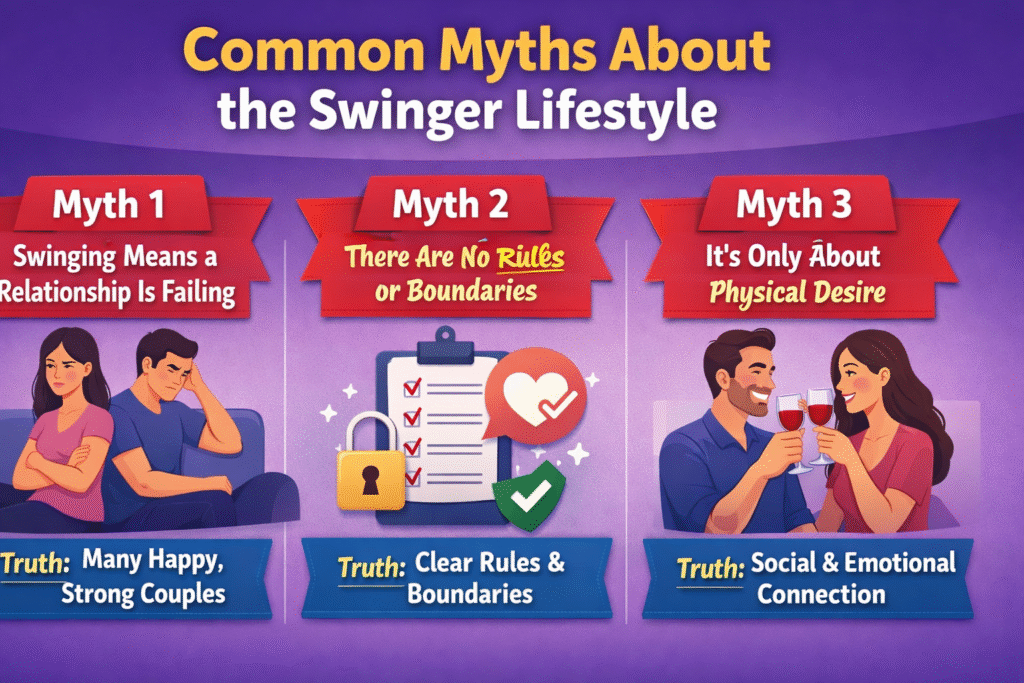
Myth One: Swinging Means a Relationship Is Failing
One of the biggest misconceptions is that couples explore swinging because they are unhappy. Research and testimonials often show the opposite many participants report strong communication and trust before exploring this lifestyle.
Myth Two: There Are No Rules or Boundaries
In reality, boundaries are a core requirement. Clear agreements about comfort levels, communication, and emotional limits are essential.
Myth Three: It Is Only About Physical Desire
While attraction plays a role, many participants emphasize social connection, trust-building, and shared experiences as equally important.
Potential Benefits of the Swinger Lifestyle
Improved Communication Skills
Couples often report stronger communication because honest conversations are required before making any decisions. Discussing expectations, fears, and boundaries can strengthen emotional understanding.
Increased Relationship Transparency
Transparency becomes a necessity, not an option. This can reduce misunderstandings and encourage emotional accountability between partners.
Shared Decision-Making
Mutual agreement fosters teamwork. Couples learn to navigate decisions together, reinforcing trust and partnership.
Emotional Growth and Self-Awareness
Many individuals report better self-knowledge, learning what they are comfortable with and what they are not.
Psychological Aspects of the Swinger Lifestyle
Emotional Intelligence Development
Managing emotions such as jealousy, insecurity, or uncertainty requires emotional awareness and maturity.
The Role of Trust
Trust is not assumed; it is actively built and maintained. Without trust, this lifestyle does not function.
Coping With Emotional Challenges
Not everyone responds the same way emotionally. Some individuals discover unexpected feelings that require reflection or professional guidance.
Hidden Risks of the Swinger Lifestyle
Emotional Strain
Even with preparation, emotional responses can arise unexpectedly. Jealousy or miscommunication can affect mental well-being.
Relationship Misalignment
If one partner is less comfortable than the other, imbalance can occur. This highlights the importance of continuous consent.
Social Stigma and Privacy Concerns
Despite increased openness, social judgment still exists. Privacy management remains a challenge for many participants.
Misinterpretation of Consent
Consent must be ongoing and clear. Misunderstandings can lead to emotional harm if boundaries are not respected.
Legal and Ethical Considerations in 2026
Legal Awareness
Laws regarding relationships vary by region. While consensual adult relationships are legal in many areas, public behavior or privacy violations may carry consequences.
Ethical Responsibility
Ethics in the Swinger Lifestyle revolve around honesty, respect, and informed consent. Ethical participation prioritizes emotional safety over personal desire.
Safety, Consent, and Communication
Importance of Clear Communication
Open discussions before, during, and after any experience are essential to avoid misunderstandings.
Establishing Boundaries
Boundaries can include emotional limits, communication rules, or social visibility preferences.
Ongoing Consent
Consent is not a one-time agreement. It must be revisited regularly and respected immediately if withdrawn.
Swinger Lifestyle vs Traditional Relationships
Differences in Structure
Traditional relationships often rely on exclusivity, while swinging relies on negotiated agreements.
Similarities in Core Values
Despite differences, both relationship types value trust, respect, and emotional safety.
Who Should and Should Not Consider This Lifestyle
Suitable for Individuals Who
- Value open communication
- Are emotionally self-aware
- Respect boundaries
- Prioritize mutual consent
Not Suitable for Individuals Who
- Avoid difficult conversations
- Struggle with trust
- Feel pressured by a partner
- Expect quick emotional solutions
Social Impact and Community Support
Role of Supportive Communities
Educational communities emphasize respect and learning rather than promotion or pressure.
Importance of Education
Accurate information helps reduce harm, stigma, and unrealistic expectations.
Pros and Cons Summary Table
| Aspect | Potential Benefits | Hidden Risks |
|---|---|---|
| Communication | Stronger dialogue | Emotional overload |
| Trust | Deepened transparency | Misalignment issues |
| Personal Growth | Self-awareness | Unexpected emotions |
| Social Experience | Community support | Social judgment |
| Relationship Dynamics | Shared decisions | Boundary challenges |
How Media Representation Affects Perception
Sensationalism vs Reality
Media often exaggerates or misrepresents the Swinger Lifestyle, leading to misunderstanding.
Importance of Responsible Content
Educational content helps present balanced perspectives rather than extreme narratives.
Expert Perspectives on Relationship Diversity
Relationship counselors emphasize that no single model fits everyone. What matters most is mutual respect, communication, and emotional safety.
Future of the Swinger Lifestyle in 2026 and Beyond
As conversations around relationships continue to evolve, the focus is shifting toward informed choices rather than judgment. Education and mental health awareness are becoming central to discussions about alternative lifestyles.
Final Thoughts: Making Informed Choices
The Swinger Lifestyle is neither inherently positive nor negative. Like any relationship structure, it carries benefits and risks. Understanding those realities helps individuals make informed decisions aligned with their values and emotional well-being.
The most important truth in 2026 is this: consent, communication, and respect matter more than labels.